Why stock photography is dead for CPG brands
By Palu ·
When you've spent years building brands, you develop this almost annoying ability to spot exactly where an image came from.
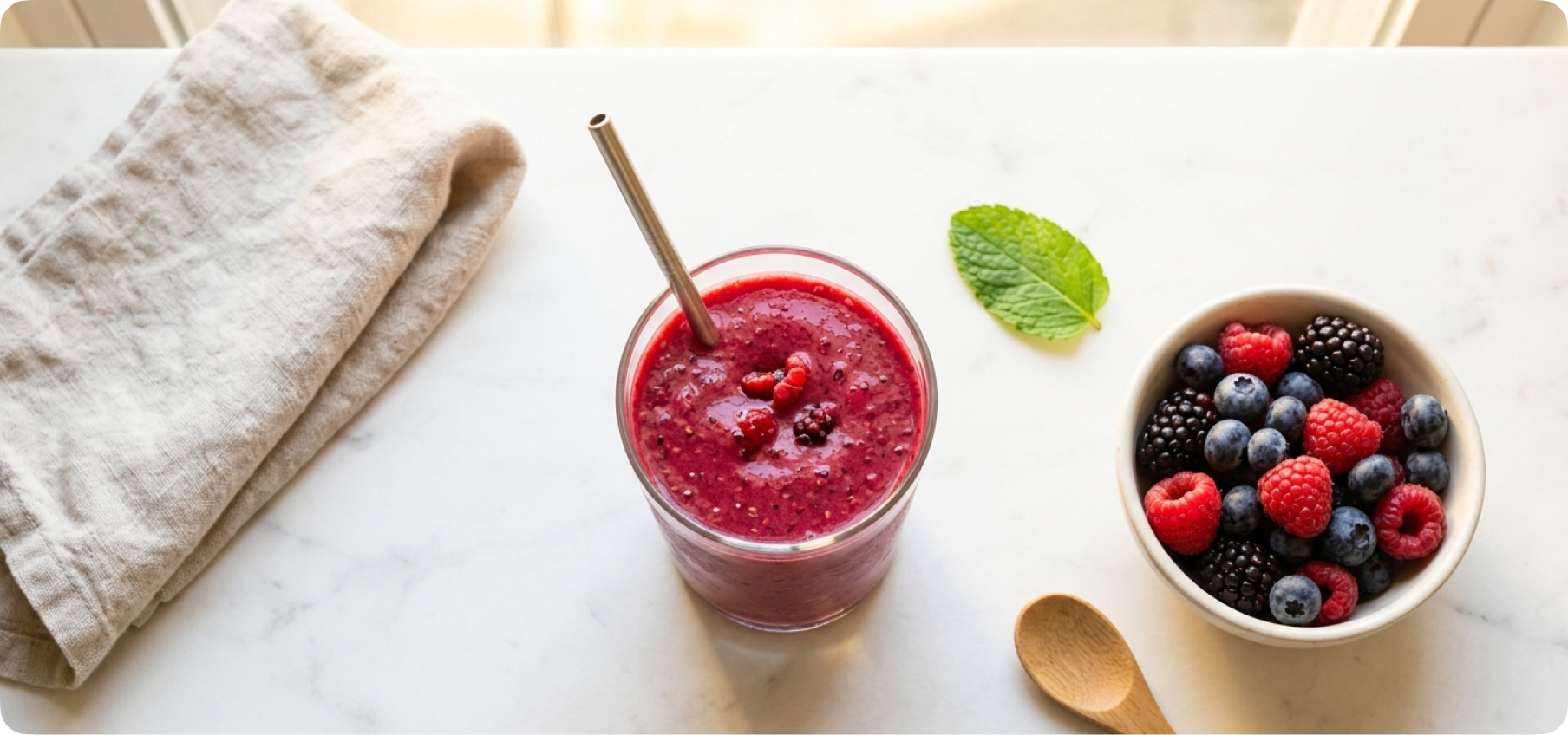
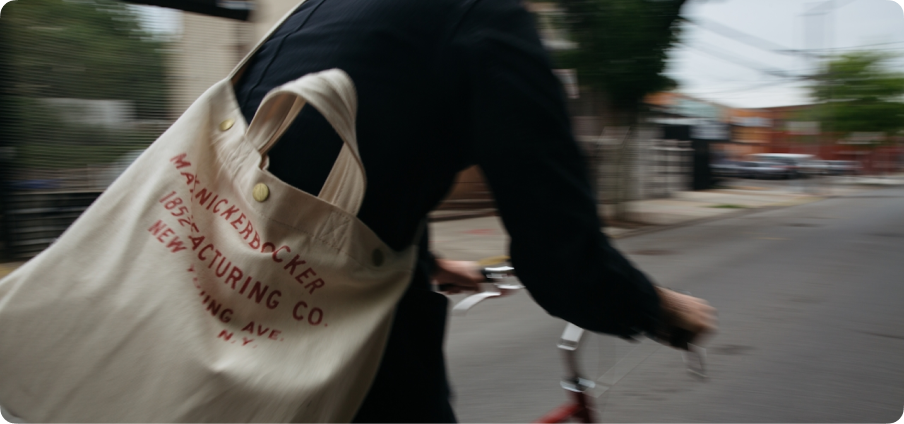
Adobe Stock has a look. Pexels has a look. Envato has a look. You see a lifestyle photo on a CPG brand's website and before you even read the headline, you've already clocked the library. It takes maybe two seconds. The smoothie in golden light? Freepik. The hands on the coffee mug? Unsplash. The flat lay with the single mint leaf? You've seen it on four different brands.
You can't unsee it. And the truth is: your customers are starting to notice too.
Stock Wasn't Built to Carry a Brand
Stock photography was designed to fill gaps. Blog headers. Wireframe placeholders. Internal presentations. It was never meant to be the visual foundation of a brand, and when CPG companies use it that way, the cracks show fast.
The entire stock model depends on images being generic enough for anyone to license. That's the product. A lifestyle image broad enough to work for a protein bar company, a skincare line, and a dog food brand is, by definition, not saying anything specific about any of them. Your competitor is pulling from the same library. Sometimes the exact same image.
For a CPG brand that's invested real money into a distinct visual identity, specific color palettes, specific textures, a brand world that means something, filling that world with stock imagery is like decorating a custom-built house with furniture from a hotel lobby. It's fine. It's forgettable. And forgettable doesn't sell on shelves.
The One Exception We Keep Coming Back To
We barely use stock photography at CreativeWise anymore. When we do use photography, the vast majority comes from Death to Stock. Their name says it. They're an artist-owned co-op, POC-owned, with a team across Auckland, Berlin, and New York, producing 250+ fresh visuals every month through curated campaigns shot by independent creatives.
Their content doesn't look like stock. It looks like someone with taste and a point of view made it. The campaigns are modern, textured, culturally grounded. When we need contextual imagery that carries emotional weight without looking like it came from a search bar, DTS is where we go first.
Shoutout to Shaun Singh and the team for building something that actually respects the creative process. More platforms should work like this.
AI Replaced the Photoshoot. That's the Point.
We're not positioning AI lifestyle imagery as a complement to traditional photography. At CW, it replaced it. That's the service we sell, and the results speak for themselves.
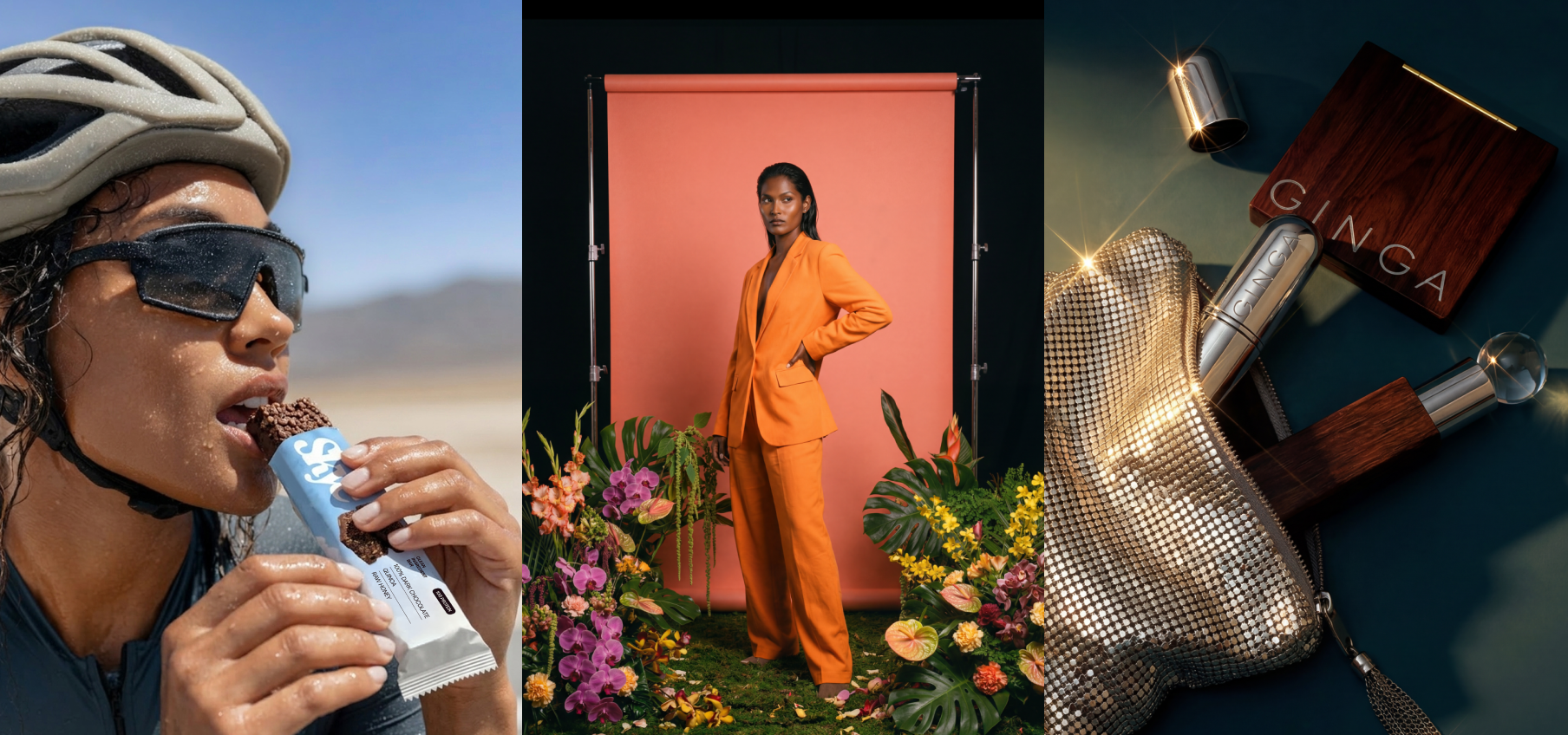
For Verdadero Tequila, we built full space visualizations for their NASCAR event: the bar setup, the environment, the brand presence in the venue. All generated before anything was physically constructed. After that, we created a complete campaign for their website. Models, outfits, locations, art direction. Every image generated through AI, tuned to Verdadero's exact brand palette, their materials, their energy. Right now, we're planning their big launch campaign the same way.
None of that came from a stock library. None of it came from a traditional photoshoot. It came from a process we've built over years: prompt construction that includes lighting physics, material PBR realism, hex color anchoring, camera angles, shadow density. We use Visual Electric, Midjourney, and Leonardo depending on what the output needs. The tool changes. The rigor doesn't.
For Skye, we generated lifestyle scenes with their protein bars in gym bags, kitchen counters, and outdoor settings while the physical product was still in production. The founders could see their brand world before it existed anywhere outside a screen. That speed changes the entire relationship between a brand and its visual identity. You're not waiting for a shoot date, a location scout, a round of post-production. You're building the world in real time.
What Gets Lost When You Settle for Generic
For Begin Health, where we manage packaging across 20+ SKUs, visual coherence isn't optional. Every touchpoint, every campaign image, every piece of lifestyle content needs to feel like it belongs to the same brand universe. Stock can't do that across 20 products. A quarterly photoshoot can, but slowly and at a cost that compounds every time a new flavor launches.
AI lets us extend the brand world in hours. New SKU? We generate lifestyle imagery the same week the dieline is approved. Seasonal campaign? The visual environment is built before the brief is even finalized.
The brands that win on shelves and screens are the ones whose visual world feels owned, not borrowed. When every image on your site could belong to three other companies, you've already lost something you can't get back with a better product photo.
Stock photography had its moment. For CPG brands building something that actually needs to feel like theirs, that moment is over.
CreativeWise is a packaging and brand design studio for CPG brands. We build brand worlds, packaging systems, and AI-generated lifestyle imagery for brands scaling from 3 to 30+ SKUs.