What makes a good Shopify designer
for consumer brands
By Palu ·
A designer's portfolio will show you the mockup. The Figma file. The version that got approved. What it won't show you is what actually went live. And for consumer brands running on Shopify, selling through Amazon storefronts, and launching DTC landing pages, the live version is the only one that matters.
This is the gap most people don't know to ask about. The design looks incredible in the presentation. Then it gets built and something is off. The spacing feels wrong. The mobile experience is clunky. The product page doesn't feel like the brand that shows up on the shelf. It's not broken. It's just not right.
That gap is what separates a good web designer from one who just makes beautiful files that never fully translate.
Design That Exists Only in Figma Isn't Design
There's a version of web design that lives in portfolios and Dribbble feeds and nowhere else. Dreamy transitions, complex scroll animations, layouts that look stunning on a 27-inch monitor. The problem is that none of it was built to function on Shopify. None of it was tested on a phone. None of it had to load in under three seconds while pulling product data from an actual store.
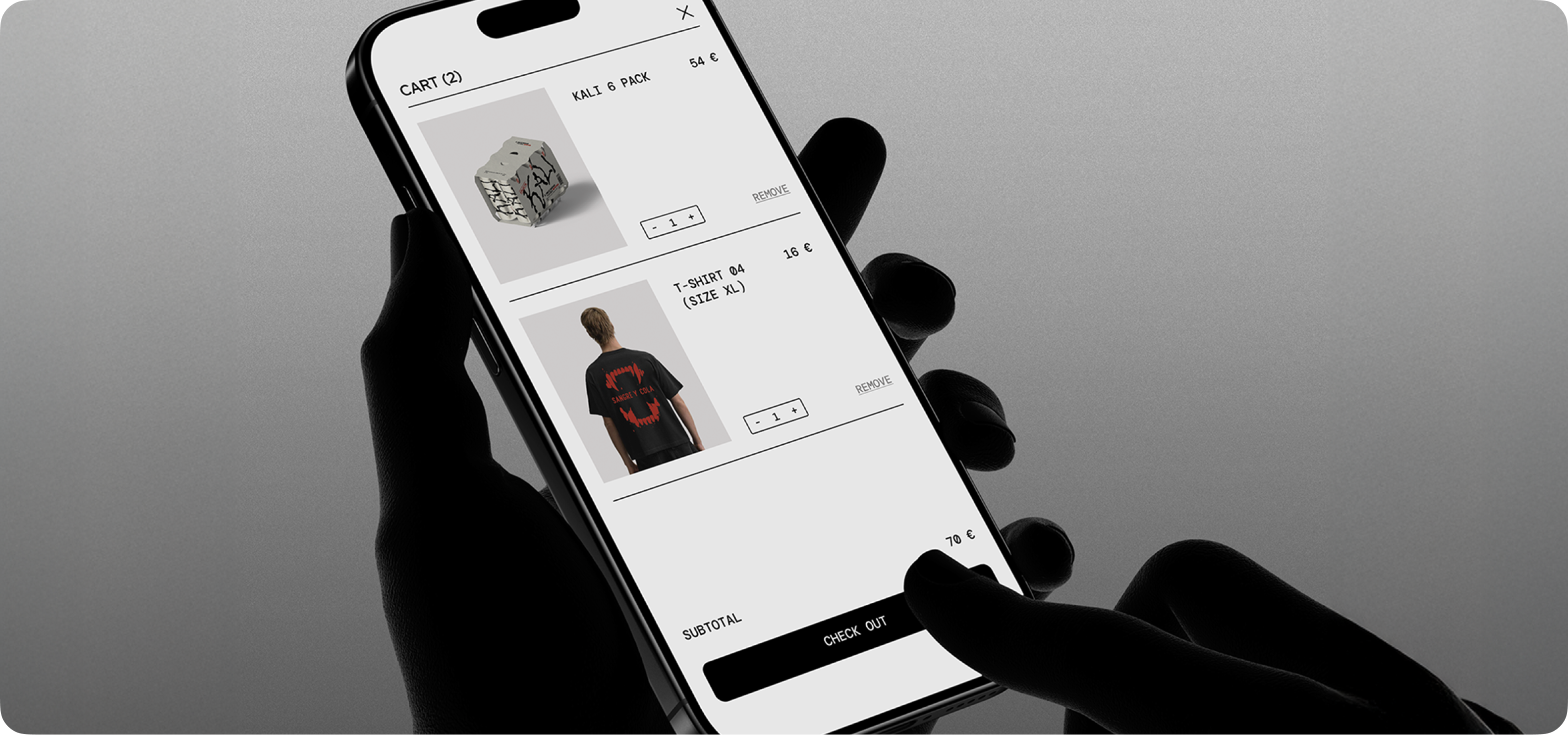
For CPG brands, this matters more than aesthetics. Over 78% of ecommerce traffic comes from mobile devices. Your Shopify store, your product landing pages, your Amazon storefront: most of your customers are seeing them on a phone screen. A designer who doesn't understand how Shopify themes work, how mobile layouts need to be rethought (not just shrunk), and how page speed affects conversion is designing for a portfolio, not for your business.
The Details That Get Lost
When a design goes from Figma to a live Shopify store, the things that disappear are never the big things. It's the corner radius on a product card. The shadow that gave depth to a section. The letter spacing that made a headline feel premium. The padding inside a button that made it feel intentional instead of default.
These details sound minor. Across an entire site they compound into the difference between a store that feels like a considered brand experience and one that feels like a theme with a logo swap.
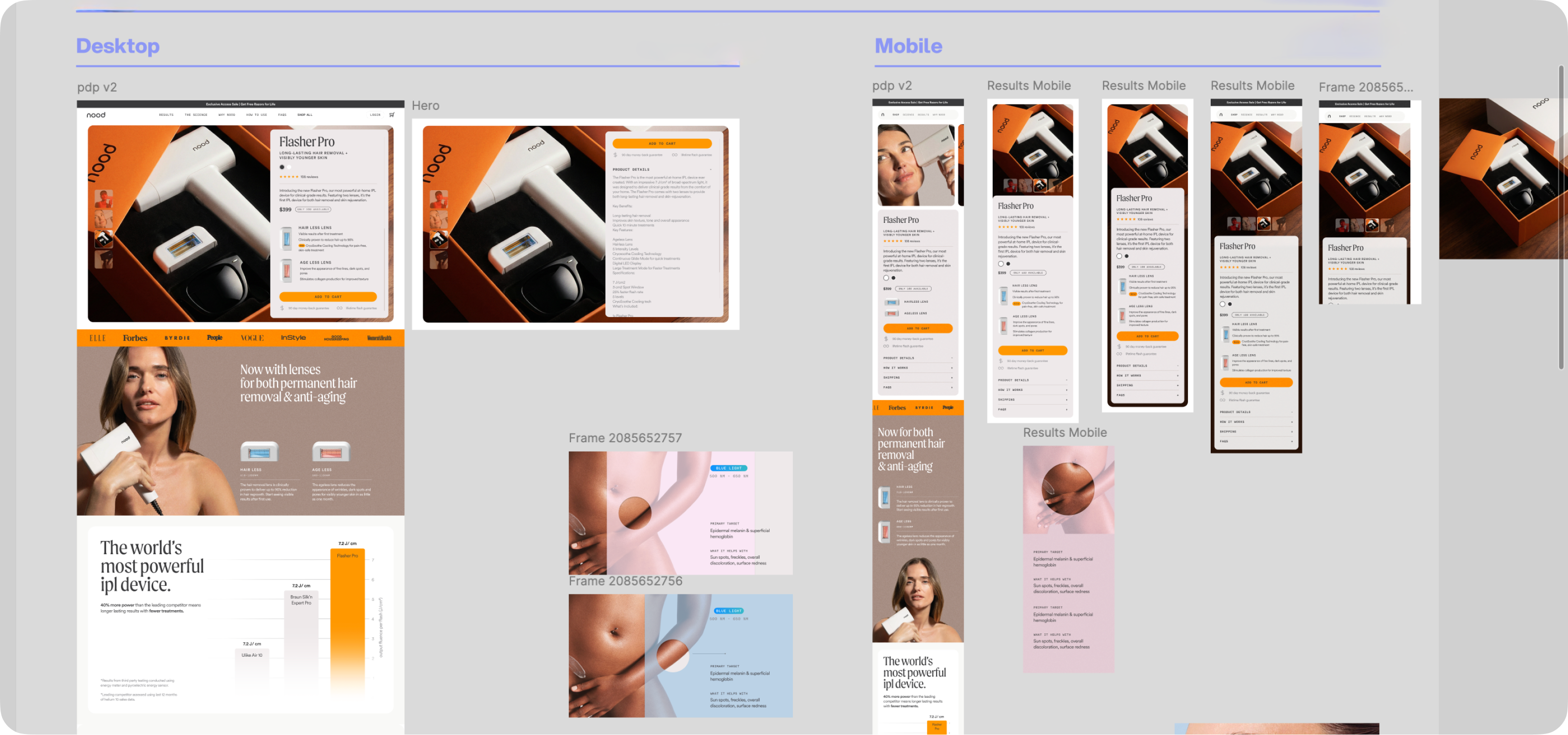
The reason this happens is structural. It's about how the design file is built. A designer who understands development structures their Figma files with consistent spacing systems (multiples of 8, because that's how pixel grids work), proper Auto Layout so developers can see exactly how elements should behave, defined text and color styles that translate directly into reusable code, and desktop and mobile designed in parallel, not one adapted from the other.
This is the invisible work that determines whether your Shopify store matches the design or ends up “close enough.”
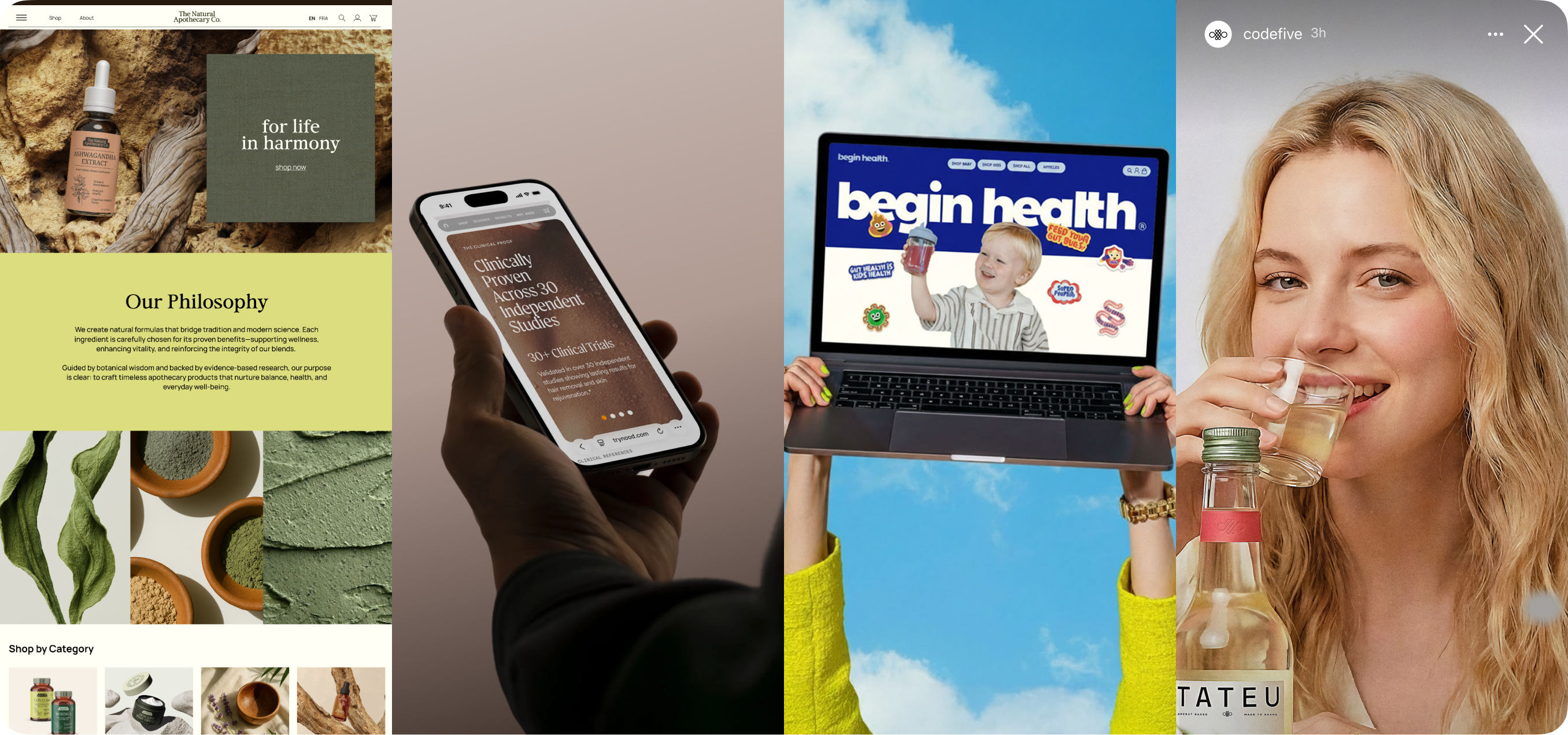
When we built Skye's Shopify store with our in-house developers, the site went live matching the Figma file down to the spacing, the shadows, the button padding. Not because we got lucky. Because the designers and developers were in the same workflow, looking at the same details, catching the same things. That's what the process is supposed to produce. It just rarely does when design and development live in separate teams.
We've designed stores for brands like Nood and Skye, and the difference between a project where the dev team shares the designer's eye and one where they don't is visible the moment the site goes live.
What to Look For
When you're evaluating a web design partner for your CPG brand, the portfolio gets you to the conversation. These are the things that tell you what the finished site will actually look like:
Do the designers understand development? Not “can they code” but do they know how their design decisions translate into Shopify themes, page speed, and responsive behavior. A designer who builds structured files with consistent spacing and proper component systems is handing developers a blueprint. A designer who builds beautiful flat compositions is handing them a guessing game.
Can they show you live sites, not just mockups? Ask to see the actual URL next to the original design. If there's a visible gap between the two, that gap will show up in your project.
Is mobile designed or just adapted? For CPG ecommerce, mobile is where the money is. Product pages, collection layouts, checkout flows, all of it needs to be designed for a phone first and a desktop second. If mobile is a resize of desktop, your conversion rate will feel it.
Do they work with Shopify specifically? Shopify has its own logic: themes, sections, metafields, app integrations. A designer who's built ten Shopify stores will make different (better) decisions than one who's designed ten websites and never touched the platform.
The best Shopify designers you'll find have great taste. But taste alone doesn't get a store live. The ones worth hiring are the ones whose work looks the same on your screen as it did in the Figma file. Ask for the live URL. You'll know in ten seconds.
CreativeWise is a packaging and brand design studio for CPG brands. We build brand worlds, packaging systems, and Shopify stores for brands scaling from 3 to 30+ SKUs.